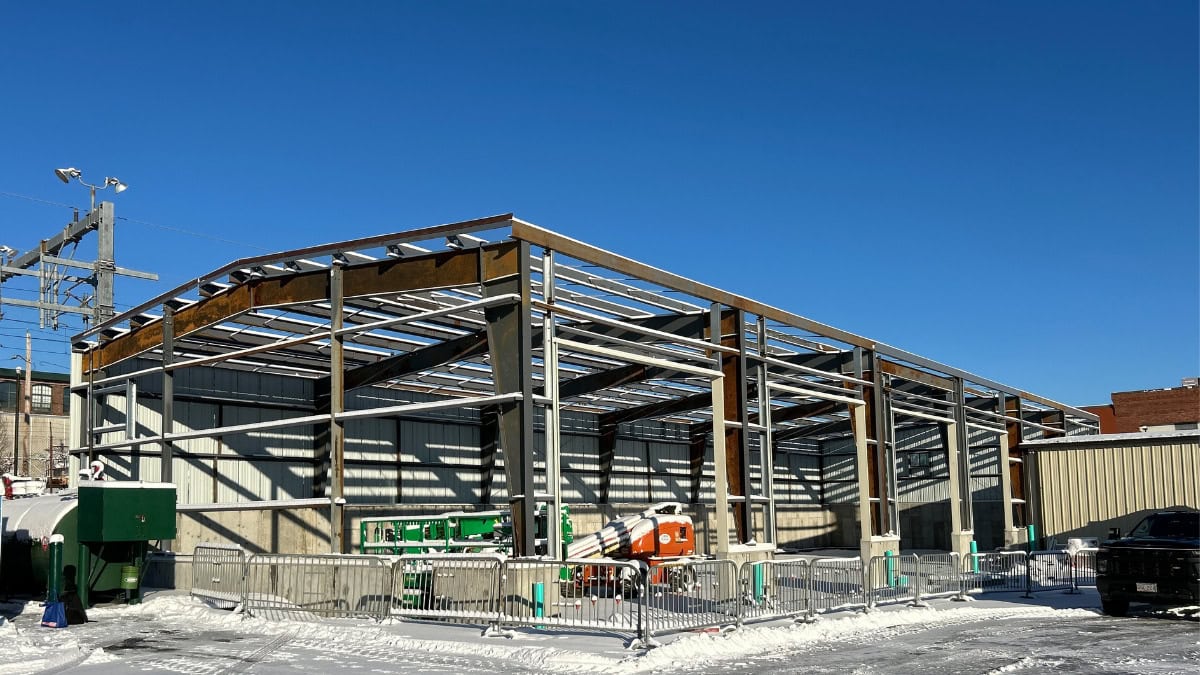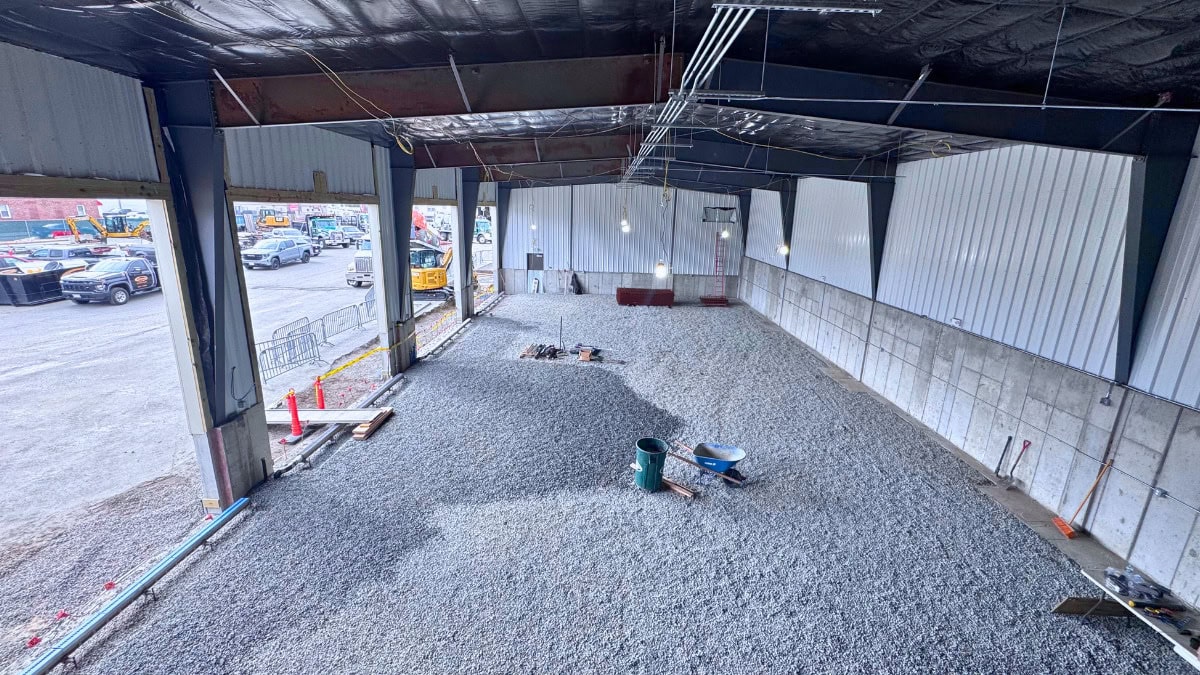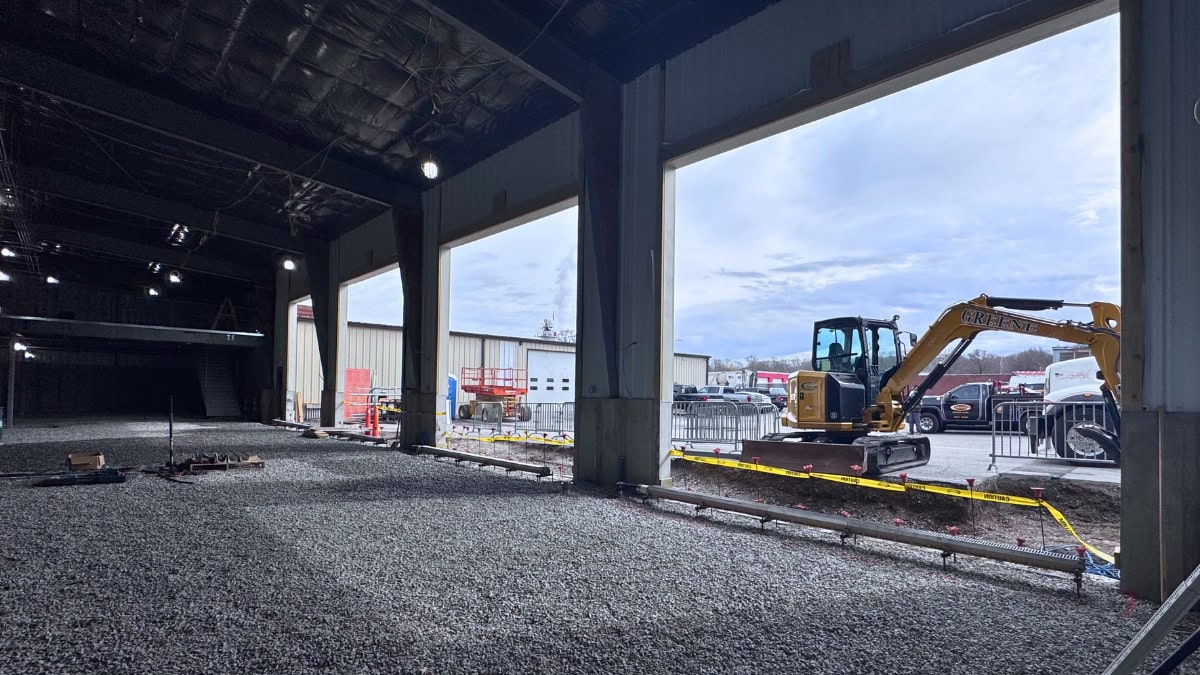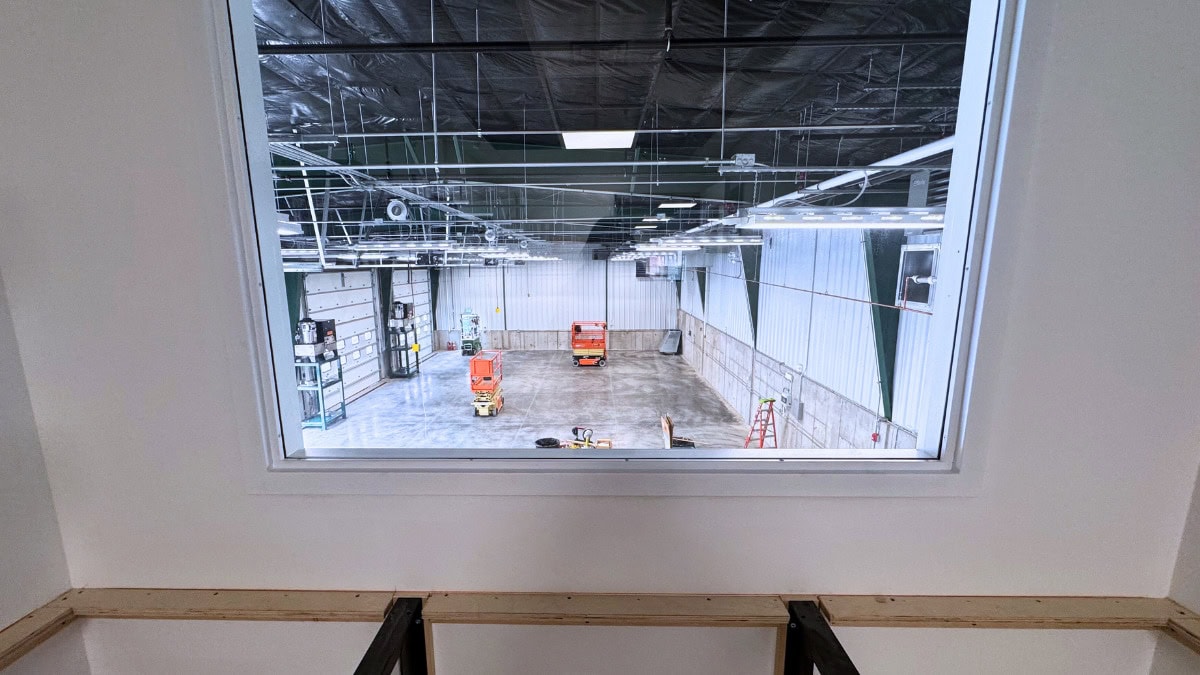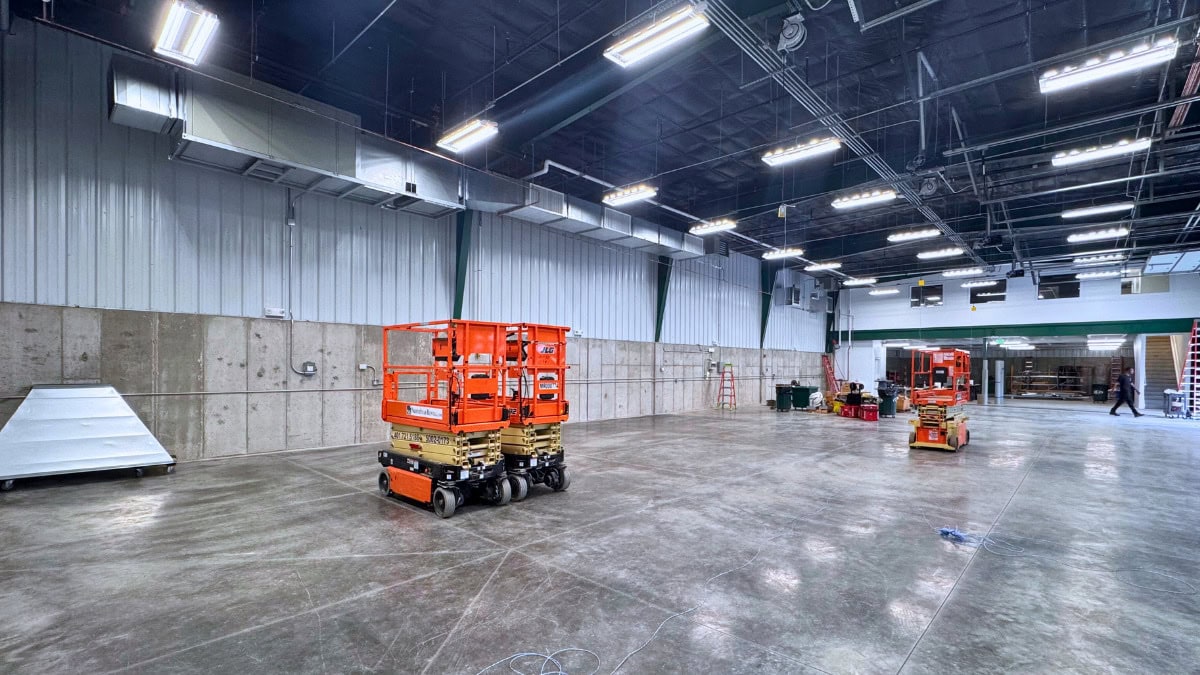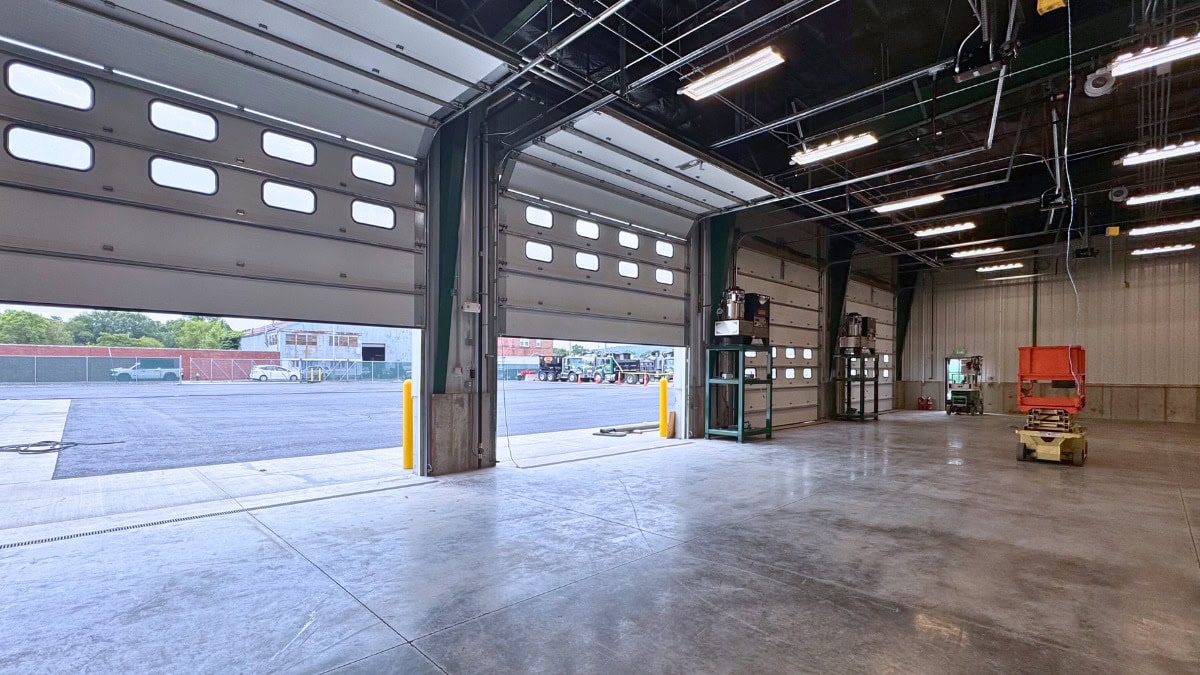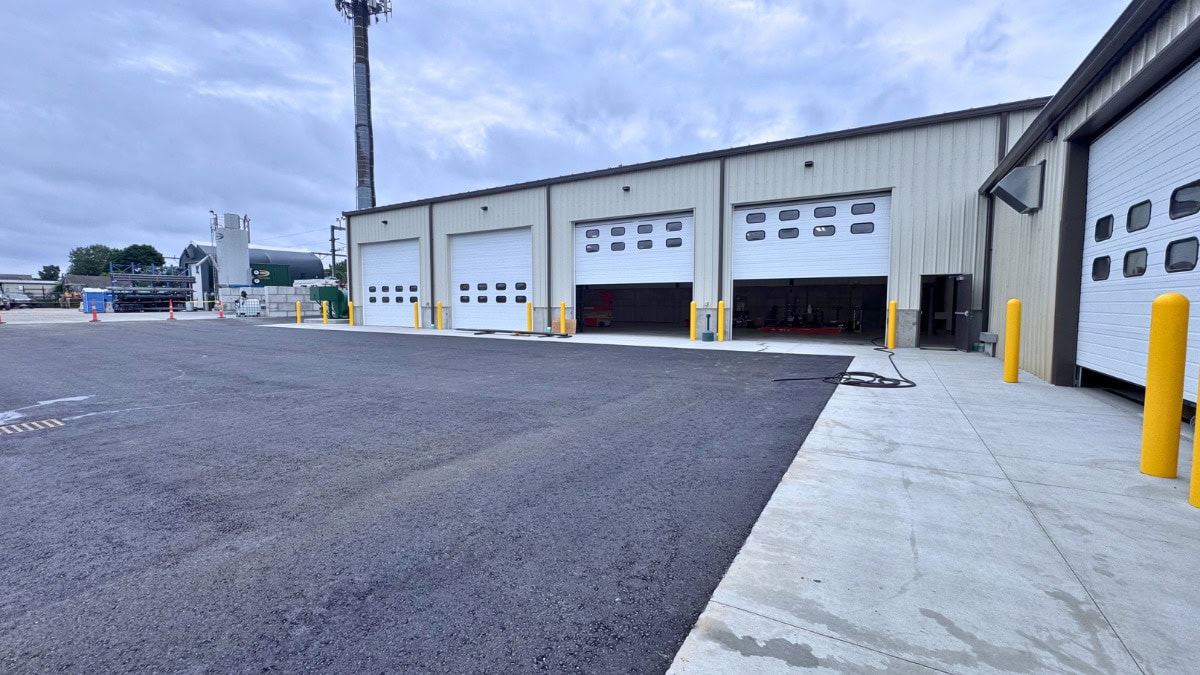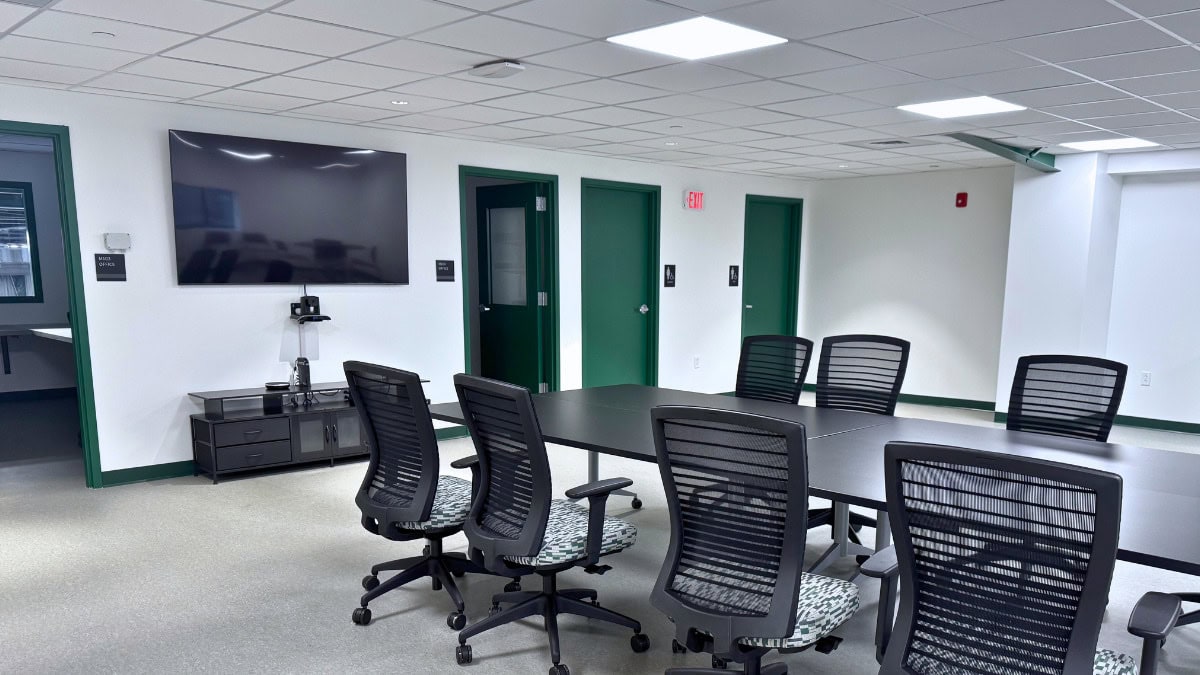
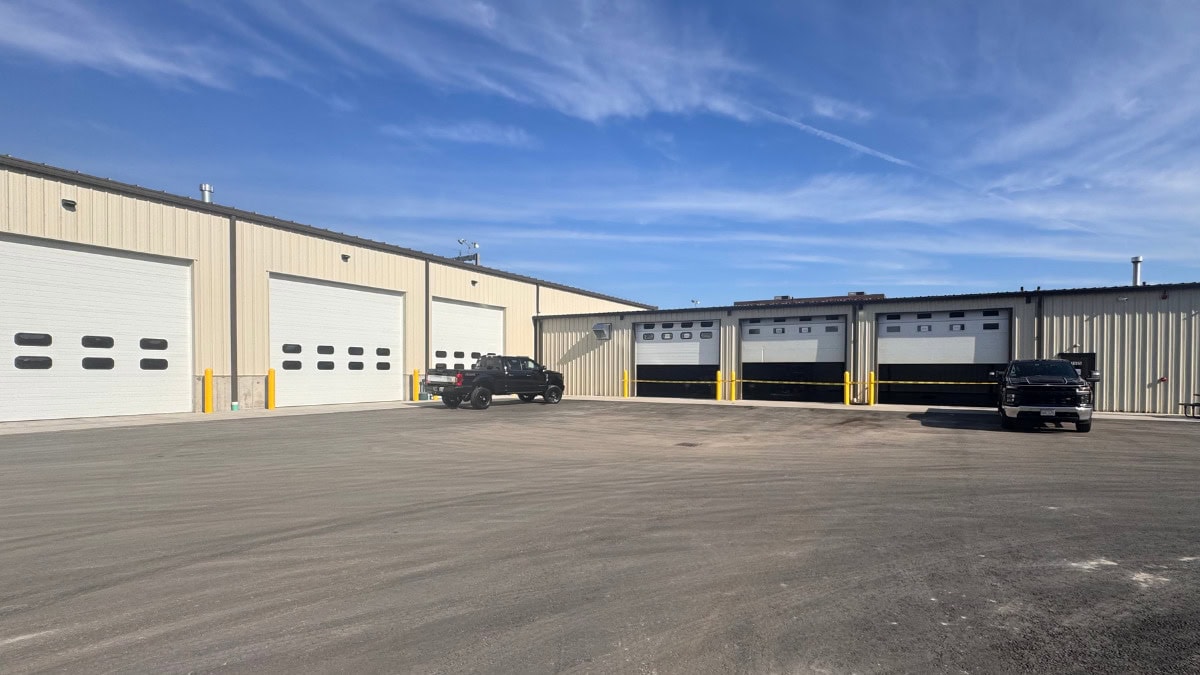
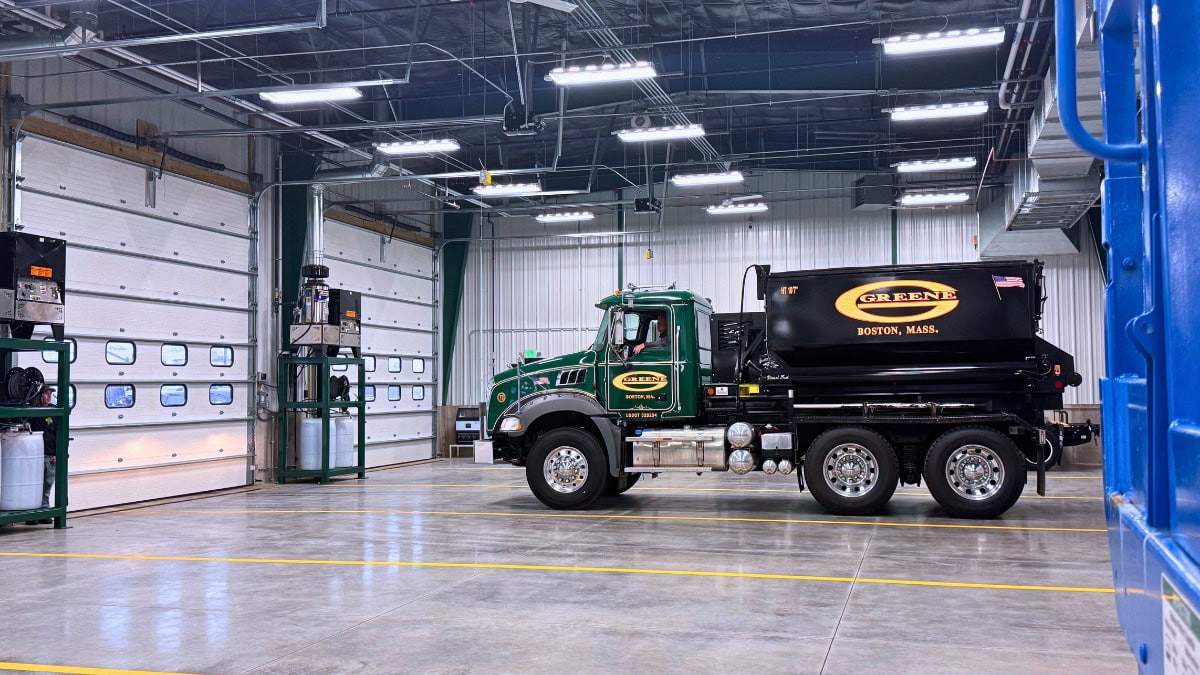
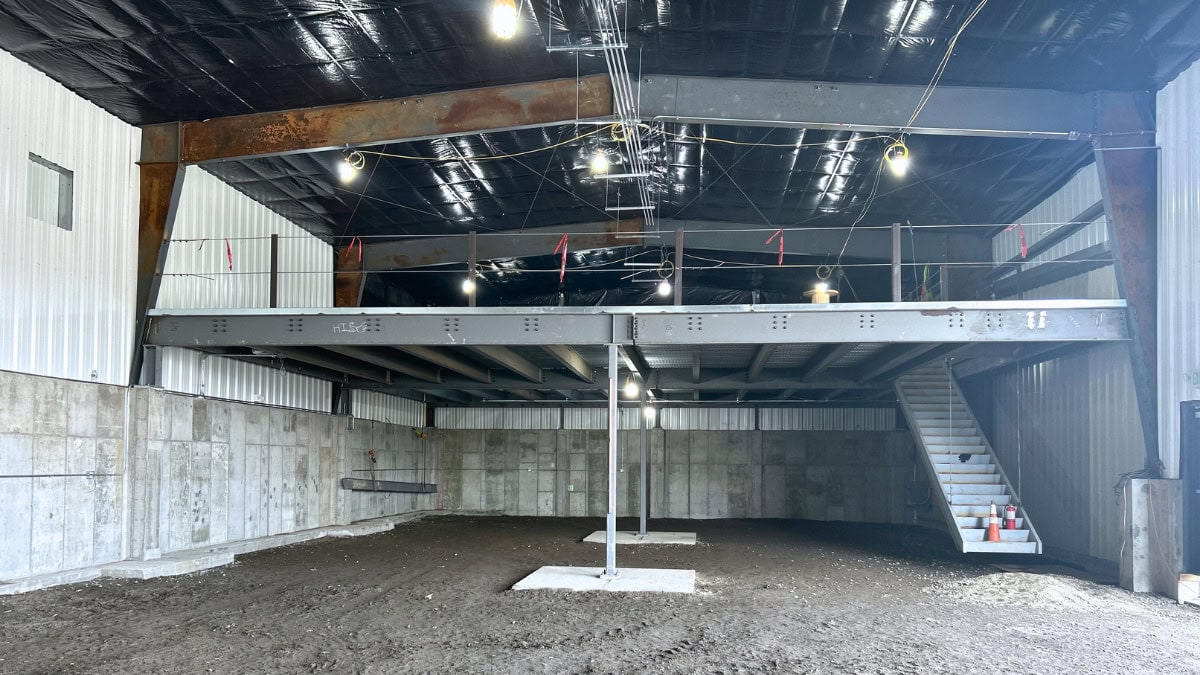
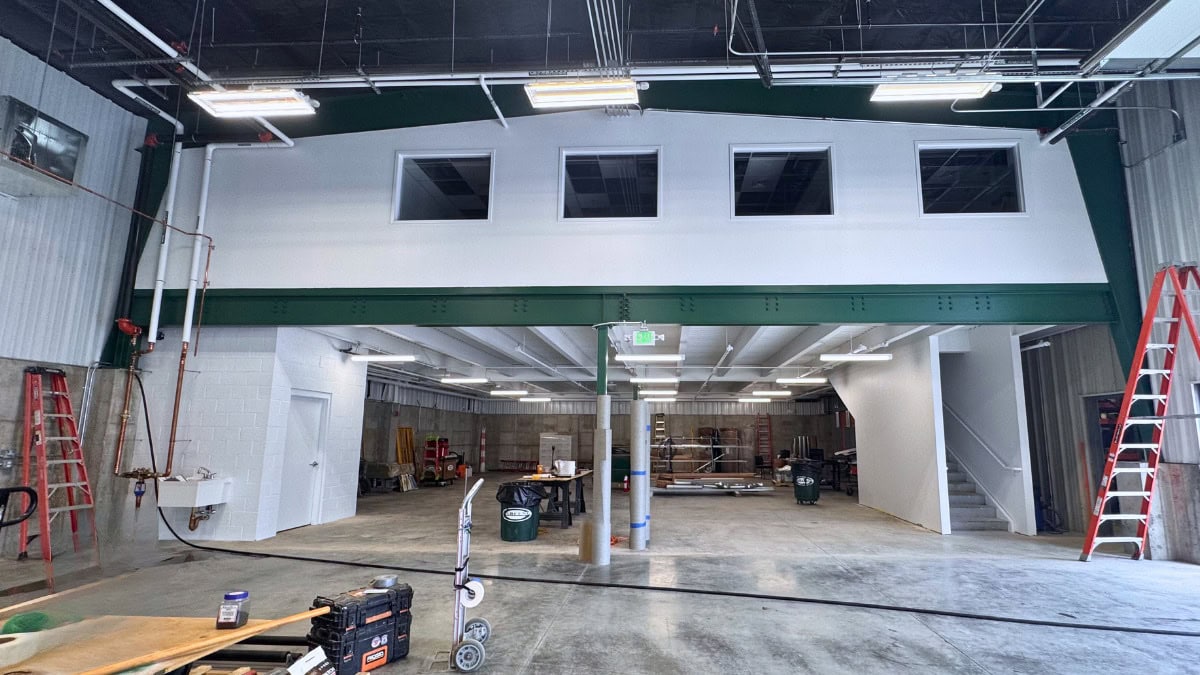
The 2025 build-out included a new warehouse, mezzanine-level offices, and training space, which were added to the original 2016 acquisition. The project was delivered in a live yard environment with complete operational continuity.
Excavation took place within 30 feet of active commuter and high-speed rail lines, so there were strict compliance protocols from MBTA and Amtrak. A sheet pile shoring system was engineered and approved to protect the slope and rail above. Crews installed 130 linear feet of heavy-duty sheeting to a depth of 25 feet. Excavation uncovered a mix of unsuitable soil, railroad ash, and buried debris. These were removed and replaced with compacted processed fill under direction from a geotechnical engineer.

The G. Greene Civil Division self-performed all concrete foundation work, including 10-foot poured walls at the rail-facing side. These walls needed specialized formwork and precise anchor bolt placement for steel erection.
After foundation backfill and subdrain installation, new storm tie-ins were completed along with a precast oil-water separator to meet BWSC requirements. Interior drains and sewer line relocation were coordinated and executed under permit too.
A 12-inch crushed stone base was placed and fine-graded for interior slab prep. Exterior work included apron pours, 24 protective bollards, utility tie-ins, and a resurfacing of the adjacent lot. All sitework, including grading adjustments to manage runoff, was performed with zero interruption to our existing yard functions.
Several scope changes and regulatory conditions required procedural coordination and scheduling adjustments.
First, sheet piles were added after initial design to meet slope stability concerns near MBTA and Amtrak rail lines. Each agency required independent licensing and review, which extended permitting timelines. The existing mechanic division had to be temporarily relocated to Foxboro to preserve uninterrupted service to the active fleet.
The project also resumed under G. Greene’s Building Division after a three-year delay from a previous contractor. Updates to sitework, utilities, and structural elements were identified and implemented under compressed timelines to maintain momentum and reduce downstream disruption.
We completed the expansion without disrupting active yard operations. The new infrastructure meets current code requirements. Importantly, it supports future capacity and our long-term vision, all while improving team coordination.
Have a project in mind? Let’s talk about how we can bring it to life—with experience, precision, and safety at the core of everything we do.